
From Class Clown to Content King: How Anwar Jibawi Built a Multi-Million Dollar Empire
Anwar Jibawi turned 6-second Vine clips into a multi-million dollar empire. Explore his path from college dropout to filmmaker.

Anwar Jibawi’s career started in a bathroom with a loose toilet. He filmed a stunt on a local freeway to make a group chat of eight people laugh. He wasn’t thinking about a career.
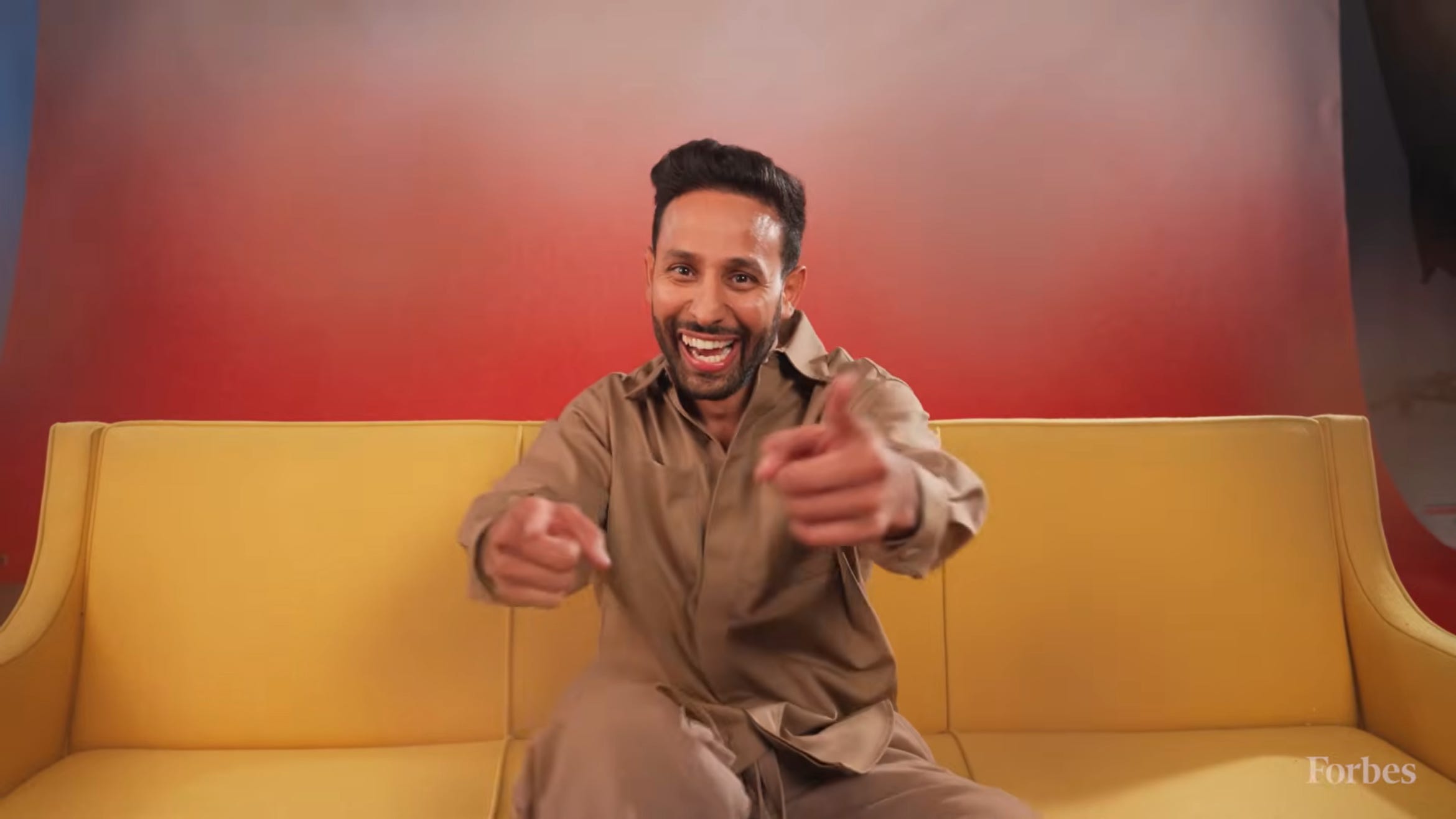
When that video hit a million views on Vine, something changed. Jibawi was still the guy working at his family’s cash-for-gold shop in Bell, California, but he was also something else now. Today he has 83 million followers and a content operation that runs like a small studio. His story is less a blueprint than a case study in what happens when someone is genuinely good at something and doesn’t quit when the money disappears.
1. Comedy as a survival strategy
Jibawi grew up the shortest, skinniest kid in a house of six boys. He learned early that humor was protection. In school, making people laugh kept him out of trouble and got him in with the right crowd. He wasn’t performing for an audience; he was staying safe.
“It all started from like me being the small kid and I don’t want to get bullied so I got to resort to comedy and now... it created an empire.”
The brands built on genuine necessity tend to last longer than the ones built on wanting to be famous.
2. The back catalog
Most creators are stuck on a treadmill: stop posting, stop growing. Jibawi found a way off it. With 5,000+ videos accumulated over a decade, he rotates older content the way a TV network replays Seinfeld. The production cost was paid years ago. The views are still coming in.
This means he could, in theory, pause production for a year while his existing library generates AdSense revenue and pulls new viewers through platform discovery. He’s not just making clips. He’s building a catalog that keeps working.
3. No film school, a lot of films
Jibawi calls himself a director, not an influencer, and the distinction holds up. He watched two to three movies a day to figure out why things worked, not just what worked.
He credits Buster Keaton and Charlie Chaplin for teaching him how little movement you need to land a joke. Edgar Wright’s Hot Fuzz gave him a framework for comedic timing and visual transitions. Wes Anderson taught him precision. Jim Carrey taught him that a face can carry a scene.
“I really want to think outside the box... you’re not reinventing the wheel. It’s about what I can take from that and make it my own.”
He applied that curriculum to six-second Vines. Now he’s applying it to 90-minute scripts.
4. No dialogue, no translation costs
Every piece of content Jibawi makes has to pass one test: would an 80-year-old in Wisconsin and a young girl in Pakistan both get the joke?
By leaning into physical, slapstick comedy with almost no dialogue, he removed the language barrier entirely. His content travels without localization. That’s not an accident; it’s a deliberate production constraint that opened up a global audience.
5. How the operation runs
Jibawi used to make his brothers hold the camera. Now he runs a phased production cycle: one week for writing and brainstorming (producers kept out so ideas don’t get filtered too early), one week for shooting, one week for post.
The management approach is worth noting. He doesn’t just hire people and assign tasks. He teaches his writers and producers his specific way of thinking about comedy so they can make decisions without him. The goal is to scale the voice, not just the volume.
6. Brand deals and the dry spell
Jibawi turns down alcohol brand deals because he doesn’t drink. That’s a simple rule, and it’s cost him real money.
He also talks openly about a harder period that most creator success stories skip: after his first $200 check, he went a full year making nothing. He kept the gold shop job while he waited to see if the income would return. It’s the kind of detail that gets edited out of the highlight reel but matters more than almost anything else in understanding how the business actually works. The audience trust he has now is partly a product of that selectivity. When he does take a deal, it lands differently.
Conclusion
The line between digital creators and traditional Hollywood has been blurring for years. Now it’s mostly gone. Saturday Night Live posts short clips to reach people who don’t watch TV. Netflix added vertical video. YouTube is producing work that gets taken seriously as film.
Jibawi is making feature films. He’s using the same approach he used on Vine: figure out what makes a story work, then execute it precisely. The screen size and runtime changed. The thinking didn’t.